NHS IVF Eligibility Calculator
Check your likely eligibility for NHS-funded IVF in under two minutes.
Enter your registered GP surgery postcode and answer a few questions about your age, BMI, fertility history and circumstances. We'll show which NHS authority covers you, whether you may meet its current criteria, how many funded cycles may be available and what to do next.
Free · Instant result · UK-wide coverage · No account required
Check NHS IVF eligibility in your area
Answer a few quick questions for an indicative idea of whether you may be eligible for NHS-funded fertility treatment in the UK.
This calculator provides an indication of your potential eligibility for NHS-funded fertility treatment. Final funding decisions are made by your local NHS authority and individual circumstances may affect eligibility.
Covers all 42 Integrated Care Boards in England, plus national NHS fertility policies for Scotland, Wales and Northern Ireland.
- Reviewed by:
- IVFbabble Editorial Team
- Last reviewed:
- October 2026
Where our information comes from
For England, we use the Department of Health and Social Care's NHS-funded IVF in England summary on GOV.UK, the individual ICB fertility commissioning policies it links to, and the current NICE guideline Fertility problems: assessment and treatment (NG257), published in March 2026. GOV.UK states its table was accurate as at 11 September 2025 and advises checking individual ICB policies for the latest position, so it should not be read as a live record of every local policy.
For Scotland, Wales and Northern Ireland we use official NHS, NHS Wales and Health and Social Care sources. Local policies can change at any time, so always confirm your eligibility with your ICB, health board or referral service before making decisions.
How many IVF cycles does the NHS fund across the UK?
NICE recommendation: NICE NG257 recommends 3 full cycles for eligible people under 40 (with up to 3 further cycles considered) and 1 full cycle at 40 or 41 for those who have not had IVF before. NICE guidance is not mandatory, and what is actually funded is decided locally:
| Nation | Locally commissioned NHS provision | Source |
|---|---|---|
| England | Set separately by each of the 42 Integrated Care Boards. GOV.UK data (accurate at 11 September 2025) shows most ICBs fund 1 cycle, often a 'non-full' cycle, while a small number fund more. Some policies were unavailable or under review. | GOV.UK (DHSC) |
| Scotland | Up to 3 cycles of IVF/ICSI for eligible patients under 40 (new referrals from 1 April 2017), and 1 cycle at 40 to 42 in specific circumstances. A national review of access criteria is due to report by early summer 2027. | NHS Scotland access criteriaScottish Government |
| Wales | Up to 2 cycles for eligible women under 40, and 1 cycle at 40 to 42 if additional criteria are met. Commissioned nationally for Wales. | Senedd Research |
| Northern Ireland | 1 full cycle: a fresh transfer plus frozen transfers until a live birth or no frozen embryos remain, for eligible women added to the waiting list on or after 1 October 2022. | Department of Health NIBelfast Trust RFC |
Eligibility criteria such as age, BMI and existing children also apply. Always confirm with your local NHS service.
Our NHS IVF Eligibility Calculator helps you understand whether you may qualify for NHS-funded IVF, NHS fertility treatment and fertility funding in England, Scotland, Wales and Northern Ireland.
Access to NHS-funded fertility treatment varies across the UK and depends on factors such as age, fertility history, previous treatment, relationship status and local funding criteria. While national guidance exists, NHS IVF eligibility criteria and IVF funding rules are set locally — so where you live shapes the NHS fertility pathway available to you.
If you'd like the background first, read our complete guide to NHS fertility treatment and IVF funding.
This page brings together the IVF eligibility requirements used across England, Scotland, Wales and Northern Ireland, alongside answers to common questions about NHS fertility funding and the IVF postcode lottery, so you can plan your next steps with confidence.
What NHS-funded IVF is my area entitled to?
Where you live decides how many rounds of NHS-funded IVF you may be entitled to — anywhere from none to three full cycles — and each region also sets its own age range and eligibility rules. Pick your Integrated Care Board (ICB) or nation below.
Interactive UK map
Tap a region to select it
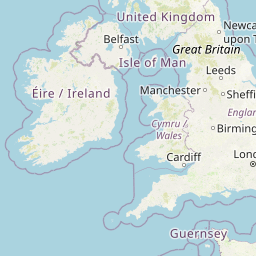




Regions shown are approximate — not a postcode finder. For exact ICB boundaries use the NHS ICB finder.
Filter by funding band
This is an indicative summary of publicly-available ICB fertility policies. Cycle counts and criteria are updated frequently — your age, BMI, existing children, relationship length and previous treatment all affect whether you'll qualify. Always confirm with your GP and local ICB.
How Does NHS Fertility Funding Work?
In the UK, fertility treatment funding is managed locally by organisations called Integrated Care Boards (ICBs). Each ICB sets its own criteria, which means eligibility can vary depending on your postcode — often referred to as the "postcode lottery."
While the National Institute for Health and Care Excellence (NICE) provides national guidance in NG257, it is not mandatory. GOV.UK confirms that funding decisions in England are made by ICBs based on the clinical needs of their local population.
What does "one full cycle" of IVF mean?
One NHS "cycle" is not the same as one embryo transfer. Under NICE NG257, a full cycle of IVF, with or without ICSI, should comprise one episode of ovarian stimulation and the transfer of any resulting fresh and frozen embryos.
1. Ovarian stimulation
Fertility medication to help the ovaries produce several eggs.
2. Egg collection
The eggs are collected and fertilised in the laboratory to create embryos.
3. Fresh embryo transfer
Where suitable, an embryo is transferred in the same treatment cycle.
4. Frozen embryo transfers
Any remaining good-quality embryos from that same stimulation are frozen and can be transferred later.
What is a "non-full" cycle?
The GOV.UK summary of ICB policies says a full cycle ends when every available viable embryo has been transferred or one results in a pregnancy. Where it lists a "non-full" cycle, the ICB does not meet the NICE definition. For example, some policies fund one fresh transfer and only up to 2 frozen transfers. Leftover embryos can usually still be frozen, but further transfers may not be funded. Check your ICB's policy to see what it counts as a cycle.
Am I Eligible for NHS-Funded Fertility Treatment?
Eligibility criteria can vary, but may include:
- Age (often under 40, though this varies)
- BMI (Body Mass Index) within a specific range
- Whether you or your partner already have children
- How long you've been trying to conceive
- Lifestyle factors such as smoking
In some areas, the NHS may fund one or more IVF cycles, while in others, funding may be more limited.
What Is the Process? Your Step-by-Step NHS IVF Action Plan
If you think you may be eligible, here's how to get started:
Step 0: Find Your Integrated Care Board (ICB)
Your very first step is to find your exact Integrated Care Board (ICB) by entering your GP surgery's postcode into the official NHS Find Your Local ICB tool. Because IVF funding in England is an "NHS postcode lottery," your eligibility and the number of funded cycles change completely depending on which local board covers your GP.
Find your local ICBOnce you know which board you belong to, follow this exact action plan:
1. Request Your ICB's Fertility Policy
Search your specific ICB's website or contact their Patient Experience Team for their 'Assisted Conception' or 'Fertility' policy document. Look closely at their specific local limits:
- Number of cycles — they may offer 1, 2, or the full 3 NICE-recommended cycles.
- Age cut-offs — many boards cut off funding at age 35, 40, or 42.
- Social criteria — strict rules on existing children (including step-children or children from previous relationships), BMI limits, and smoking status.
2. Book a 'Fertility Referral' Appointment With Your GP
You cannot self-refer to an IVF clinic. Book an appointment with your GP and explicitly state you want to start the NHS fertility pathway.
- Tell the GP how long you've been trying to conceive (usually 2 years of unprotected sex, or 6–12 cycles of artificial insemination).
- Ask the GP to order the standard 'Tier 1' fertility tests required by your specific ICB.
3. Complete the Mandatory Preliminary Tests
Your GP must prove you meet the clinical criteria before your local ICB will approve funding for a hospital specialist. Your GP will arrange:
- For women / individuals with a uterus: blood tests for hormone levels (e.g. AMH for ovarian reserve, Progesterone to confirm ovulation) and Chlamydia screening.
- For men / individuals with testes: a formal semen analysis to check sperm count, motility and morphology.
4. Ask for a Referral to Secondary Care
Once your test results are back, if you meet your local ICB's criteria, your GP will write a referral letter to a local hospital's Gynaecology or Fertility clinic. That hospital specialist will then do final checks and officially apply to your ICB for your IVF funding voucher.
Important Things to Know
- Waiting times can vary significantly depending on your area
- You are entitled to initial investigations on the NHS, even if treatment isn't funded
- Funding criteria can change — always check with your GP or local ICB
What If I'm Not Eligible for NHS Funding?
Not qualifying for NHS-funded fertility treatment can feel disappointing, but it doesn't mean your fertility journey has to stop.
Many people choose to explore private fertility treatment, either in the UK or abroad, giving them access to a wider range of treatment options, shorter waiting times and greater flexibility in choosing a clinic or specialist.
Private fertility treatment may offer:
- Faster access to treatment
- Greater choice of clinics, specialists and treatment options
- Access to donor programmes, fertility preservation and advanced treatments
- More flexibility around treatment timelines
Understanding Your Financial Options
Fertility treatment can be a significant investment, but there are often more funding options available than many people realise.
Depending on where you live and the clinic you choose, you may be able to explore:
- Clinic payment plans and finance options
- IVF refund programmes or money-back guarantees
- Fertility treatment loans
- Fertility grants and charitable funding programmes
- Employer fertility benefits and workplace support schemes
- Insurance-funded fertility treatment (where available)
If you're considering treatment abroad, it's also important to factor in travel, accommodation and medication costs alongside the treatment itself.
Choose Regulated Clinics
Whether you're considering treatment in the UK or overseas, always ensure your chosen clinic is appropriately regulated and licensed.
In the UK, fertility clinics are regulated by the Human Fertilisation and Embryology Authority (HFEA). If you're exploring treatment abroad, look for recognised national regulators and accredited clinics that meet high standards of patient safety and care.
Find HFEA and UK regulatorsExplore Your Options
Before making any decisions, take time to compare:
- IVF costs and treatment packages
- Funding and finance options
- Refund programmes
- Clinic success rates
- Regulation and accreditation
- Fertility treatment laws in your chosen country
Because understanding how to fund treatment is just as important as understanding the treatment itself.
NHS IVF Funding & Eligibility — Frequently Asked Questions
Quick answers about NHS-funded fertility treatment, IVF eligibility requirements and local funding criteria across the UK.
Campaigning for fairer access to NHS fertility treatment
IVFbabble has long campaigned for fairer access to fertility treatment across the UK. Together with Fertility Network UK, we helped take a petition signed by 116,000 people to 10 Downing Street, calling for greater fertility fairness and highlighting inequalities in access to NHS-funded fertility treatment.
Preparing for Your First Fertility Consultation
Whether you've been referred through the NHS or going private, your first appointment is one of the most important.
Knowing what to ask can help you understand your diagnosis, treatment options, success rates, costs and what happens next. Our expert-informed guide walks you through 15 essential questions every UK patient should ask at their first fertility appointment.
Read: 15 Questions to Ask at Your First Fertility ConsultationCreate Your Free Fertility Hub
Your personal space to track your fertility journey, save clinics and experts, follow trusted guidance, and get tailored next steps — whether you're going through the NHS, exploring private treatment, or somewhere in between.
Create your Fertility HubJoin the Pineapple Community
Connect with others navigating NHS waiting lists, eligibility decisions and private treatment. Share experiences, ask questions and get support from people who truly understand the fertility journey.
Join the Pineapple CommunityAsk a Fertility Expert
Post a question about NHS funding, ICB criteria, referrals or private treatment — and get answers from verified fertility experts, clinics and others who've been through it.
Have a Question? Ask Our ExpertsHow Babble Connect Can Help
At IVFbabble, we understand how confusing fertility pathways can feel — especially when navigating funding, referrals, and treatment options.
Through Babble Connect, we help guide you from trusted education into action — connecting you with regulated clinics, experts, and support tailored to your journey.
Whether you're exploring NHS options or considering private treatment, we're here to help you understand your choices and take your next step with confidence.
If you have any questions about this topic or anything else on IVFbabble, we're here to support and guide you — our team and leading global experts are here to help. You're not alone.
Your privacy choices
We use essential cookies to run Babble Connect. With your permission, we'd also like to set analytics and personalisation cookies to improve your experience. Non-essential cookies stay off until you choose "Accept all".